The Publishing Times
All the News That’s Fit to Publish
publishing-news · Guides
What the Guardian's Extract of Ditto Shows
The Guardian printed an extract of Cherise Saywell's Ditto under the award story: a phone booth, seven houses, a train to Sydney at 7:32 p.m., and a woman who will not use his nickname.
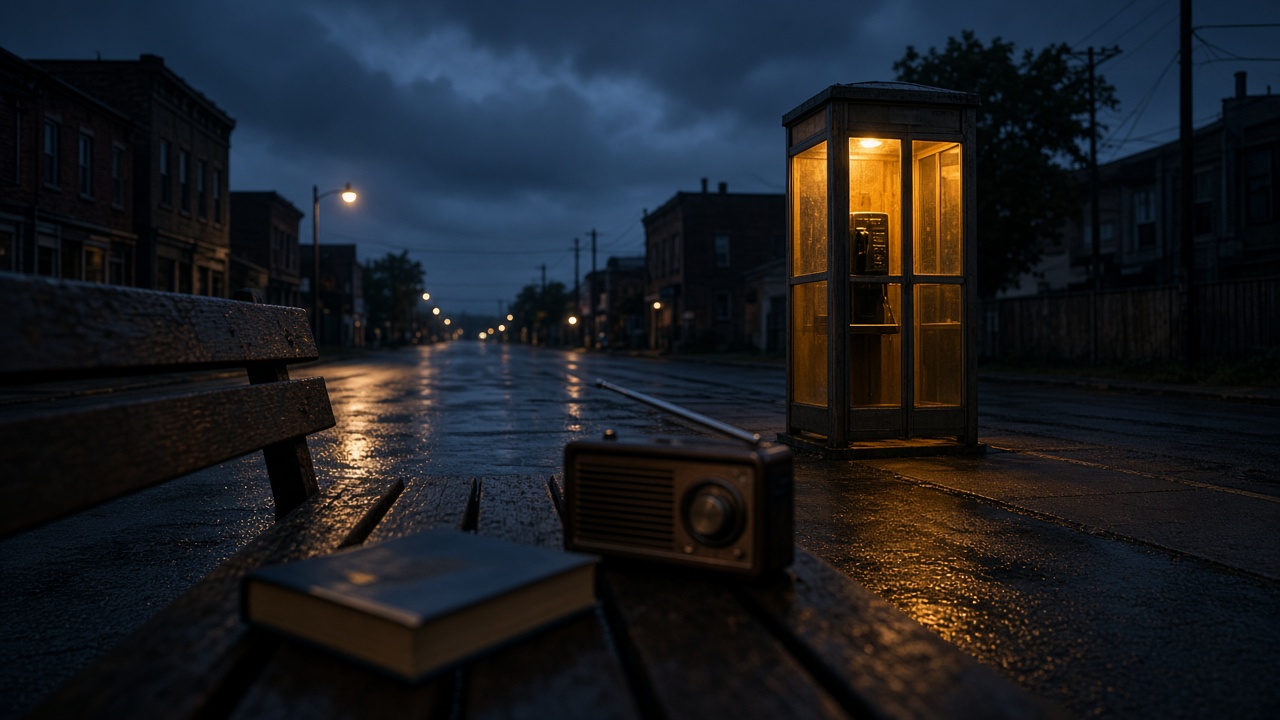
What does the page actually show of the winning story? Under Emma Loffhagen's report, The Guardian prints an extract of Cherise Saywell's "Ditto." The prize, the panel, and the teenage award announced the same night are in yesterday's desk note. This one stays inside the extract Loffhagen ran, and with two photo credits the winner story did not use.
After the call
The extract opens once the call is already made. The boy runs from the public phone booth at the top of the street, past all seven houses, including his own, until the road runs out. His father calls that spot the dead end. Past him, in the dark, the extract puts scrub, then a rocky embankment, then the railroad tracks. The sun has been down for nearly an hour. Lights are on in the houses and along the street.
He leaves the gritty bitumen for a patch of lantana and crouches in it. He owns a watch he won in a competition, and he treats it as his best thing. He finds the button that would light the face and does not press it. The extract's reason is small and practical: the light might show where he is. He plugs his ears. He looks east, which is the direction a police car would come from, if it comes.
Two clocks
A train to Sydney comes out of the same darkness at 7:32 p.m. The extract says it passes every night at that time. A woman has already given him a second number. "Twenty minutes," she told him at the booth, if he calls now and says what she told him to say. She thought the police would arrive before the train. That sentence is the last thing she said before she left him there.
The first thing she said, after she rapped on the glass, was his birth name. Not "Ditto." Then: "Your mother's Lonnie, right?" He does not answer at once. He knows she lives directly opposite the booth. He has never seen her speak to his mother, not on the street, not in the corner shop, and not anywhere the extract has reached by the time the Guardian's excerpt breaks off in the middle of that thought.
Loffhagen's news copy, above the extract, describes the same night in one line: an isolated Australian town, a boy whose mother is threatened, a public telephone box, a call to the police. The extract is the street-level version of that line. It names the number of houses, the weed he hides in, the watch he will not light, the mother's name, and the minute the Sydney train is due.
What the extract refuses to settle
By the last sentences the Guardian prints in that opening, the boy is still in the lantana. The car has not arrived. He has not gone back past his own house. The excerpt stops while he is waiting, ears covered, facing east. A review that says how "Ditto" ends is not this extract, and this note will not invent the ending.
The nickname is doing work the news summary does not have room for. The woman who knows the mother's name also knows the name he was given, and she will not use the one the street uses. He hides from a light the size of a watch face. The help he was promised is a twenty-minute gap before a train that already has a timetable.
The pictures on the two pages
Cambridge's news page credits Tom Pilston for the portrait of the National Short Story Award winner. The Guardian's story page runs a photograph credited to Julie Tinton Photography, with a caption that quotes Dr Yvonne Battle-Felton calling the story full of vivid descriptions, mounting tensions, and a compelling character. Those credits are production details of the coverage. They are not part of the fiction.
Saywell's prize, the sum, the other four names on the adult list, and the young writers' winner are in the September 30 report. Cambridge's own page, published September 30, is the other primary account of the announcement. Neither of those jobs is repeated as a second winner profile here.
Why it matters for authors
If you are judging this story from the headline, you have a prize and a subject: a child, a threat, a phone. If you are judging it from the extract The Guardian put under the headline, you have a block of seven houses, a dead end a father named, a train at 7:32 p.m. bound for Sydney, and a neighbor who uses a birth name. That is the scene the paper chose to show. The rest of the night, including whether the police beat the train, is outside the extract. Read that far before you decide what the story is. The award write-up, with the money and the shortlist, is the other piece.
Sources
- Emma Loffhagen, The Guardian, September 29, 2026: Cherise Saywell wins national short story award for a story of a child facing violence (news report and extract; photograph credited to Julie Tinton Photography)
- University of Cambridge, published September 30, 2026: Edinburgh writer and Birmingham student win 21st BBC Short Story Awards with Cambridge University (winner portrait credited to Tom Pilston)